
Our process

One process. Every product.

It doesn’t matter if you’re building a mobile app, a web app, or a website. The path to a quality digital product is the same: Discover first, Design second, Develop third, Maintain fourth.

Skip a step, and you’ll pay for it later. Rush through discovery, and you’ll build the wrong thing. Skip design, and you’ll redesign during development. Ignore maintenance, and your product will decay.

We’ve seen it happen. A lot. That’s why we follow a structured process based on the Double Diamond methodology, adapted for how real projects actually work.

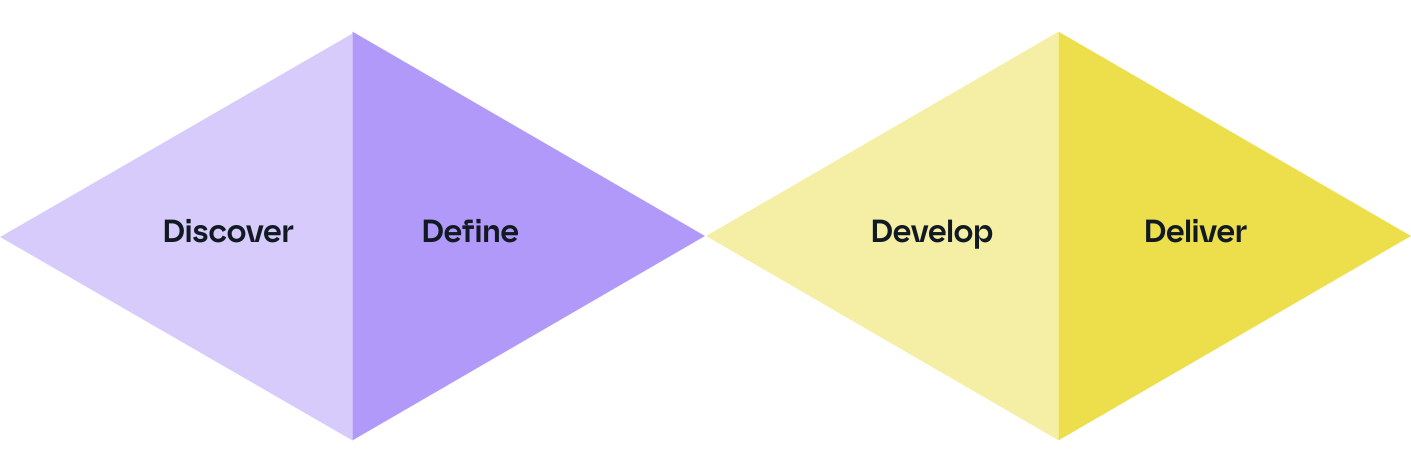
The double diamond

Our process is built on the Double Diamond, a design methodology developed by the British Design Council. It’s not new or proprietary – it’s proven.

Diamond 1: Figure out what to build

  • Discover — Explore the problem space. Research, ask questions, gather requirements.
  • Define — Narrow down. What exactly are we building? What’s in scope, what’s out?

Diamond 2: Build it right

  • Develop — Design and build the solution. Iterate until it works.
  • Deliver — Launch, test with real users, refine.

The first diamond is about doing the right thing. The second diamond is about doing the thing right. Most failed projects skip the first diamond entirely. They jump straight to building without understanding what they’re building or why.

The four phases

Here’s how the Double Diamond translates into our actual process.

Discover
{01}

Understand the problem before solving it.

We ask questions. A lot of them. What's the business goal? Who are the users? What do they need? What already exists? What are the constraints?

This phase surfaces assumptions, identifies risks, and defines success criteria. By the end, everyone agrees on what we're building and why.

Services involved: Discovery, Prototyping (for validation)

Output
  • Project scope
  • Requirements document
  • Validated assumptions
Design
{02}

Define how the product looks, feels, and works.

We create wireframes, visual designs, and interactive prototypes. We test with users when possible. We iterate until the experience is right.

Design happens before development. Not during. This matters because changing a design in Figma takes minutes. Changing it in code takes hours.

Services involved: Design

Output
  • Wireframes
  • Visual design
  • Interactive prototypes
  • Design system
Develop
{03}

Build the actual product.

We write code, set up infrastructure, integrate systems, and test everything. Development follows the approved designs. No improvising.

This phase is where most of the time and budget goes. It's also where shortcuts hurt the most. We build for maintainability, not just functionality.

Services involved: Mobile Apps, Web Apps, Websites

Output
  • Working product
  • Deployed to production
Maintain
{04}

Keep the product healthy long-term.

Digital products aren't "done" at launch. Operating systems update. Security vulnerabilities appear. User needs evolve. Bugs surface.

Maintenance keeps your product running, secure, and relevant. It's not optional - it's part of owning a digital product.

Services involved: Support & Maintenance, Audits & Optimization

Output
  • Ongoing updates
  • Security patches
  • Performance improvements

Why this order matters

Each phase builds on the previous one. Skip or rush a phase, and the next phase suffers.

If you skip...
What happens
Discovery
You build the wrong thing. Expensive to fix.
Design
Developers make design decisions. Inconsistent UX, rework.
Proper Development
Technical debt. Bugs. Harder to maintain.
Maintenance
Product decays. Security risks. Compatibility breaks.

The upfront investment in Discovery and Design typically saves 3-5x in avoided rework during Development. We’ve measured it.

How services combine

Not every project needs every phase at full depth. Here’s how common engagements work.

  • Process:
    Full discovery engagement. We research, document, and deliver a scope that you can take to any development team (including us).
  • Timeline:
    1-2 weeks
  • Outcome:
    Clear scope, validated assumptions, realistic estimates.
  • If timeline allows:
    We design everything first, get full approval, then start development. Clean handoff, no surprises.
  • If timeline is tight:
    We design in phases. Screen gets approved → moves to development while we design the next screen. This keeps things moving but requires faster approval cycles.
  • No revisions during development:
    Once a screen is in development, it’s locked. We need approval before moving to build – otherwise timelines and budgets get messy.
  • Pricing:
    Design and development are priced separately. We’ll scope both, give you a breakdown, and you’ll know exactly what each phase costs.
  • Process:
    1. Discovery (1-4 weeks) – Define what we’re building
    2. Design (2-8 weeks) – Create the experience
    3. Development (1-12 months) – Build the product
    4. Support (ongoing) – Maintain and improve
  • Why it works:
    No handoffs between agencies. One team that understands your product from day one. Faster communication, fewer misunderstandings.
  • Process:
    1. Audit (2-3 days) – Find what’s broken (accessibility, performance, or both)
    2. Optimization (project-based) – Fix the issues we found
    3. Support (ongoing) – Prevent future problems
  • Why it works:
    We diagnose before prescribing. The audit tells us exactly what needs fixing, so we don’t waste time on guesswork.
  • Process:
    1. Spec-driven development (define what we’re testing)
    2. AI-assisted build (working prototype in days/weeks)
    3. Validation (test with real users)
    4. Decision: Kill it, pivot it, or build it for real
  • Why it works:
    You learn whether your idea works before spending €50K+ on development. If it doesn’t work, you’ve spent €5K on valuable learning, not €50K on a failed product.

Frequently asked questions

Common questions about our services and how we work.

Sometimes. If you have detailed requirements, user research, and technical specifications ready, we can review them and potentially move straight to design. But “I know what I want” and “I have documented requirements” are different things. We’ll help you figure out which one applies.

It depends on complexity:

PhaseSimple ProjectComplex Project
Discovery1 week2-4 weeks
Design2-3 weeks4-8 weeks
Development1-2 months3-12 months
MaintenanceOngoingOngoing

We’ll give you specific timelines after understanding your project.

No. We do discovery-only, design-only, and development-only engagements. We also take over projects mid-stream from other agencies. The process still applies – we’ll just pick up where you are.

They will. That’s normal. Small changes we absorb. Significant changes go through a change request process: we scope the impact, you approve the additional time/cost, then we implement. No surprises.

It feels slower at the start. It’s faster overall. Projects that skip discovery and design typically spend 30-50% of development time on rework. The “slow” upfront investment prevents the expensive rework later.

Ready to start?

Every project starts with a conversation. We’ll figure out where you are, what you need, and which phases make sense for your situation.

Or explore our services: Plan | Build | Grow