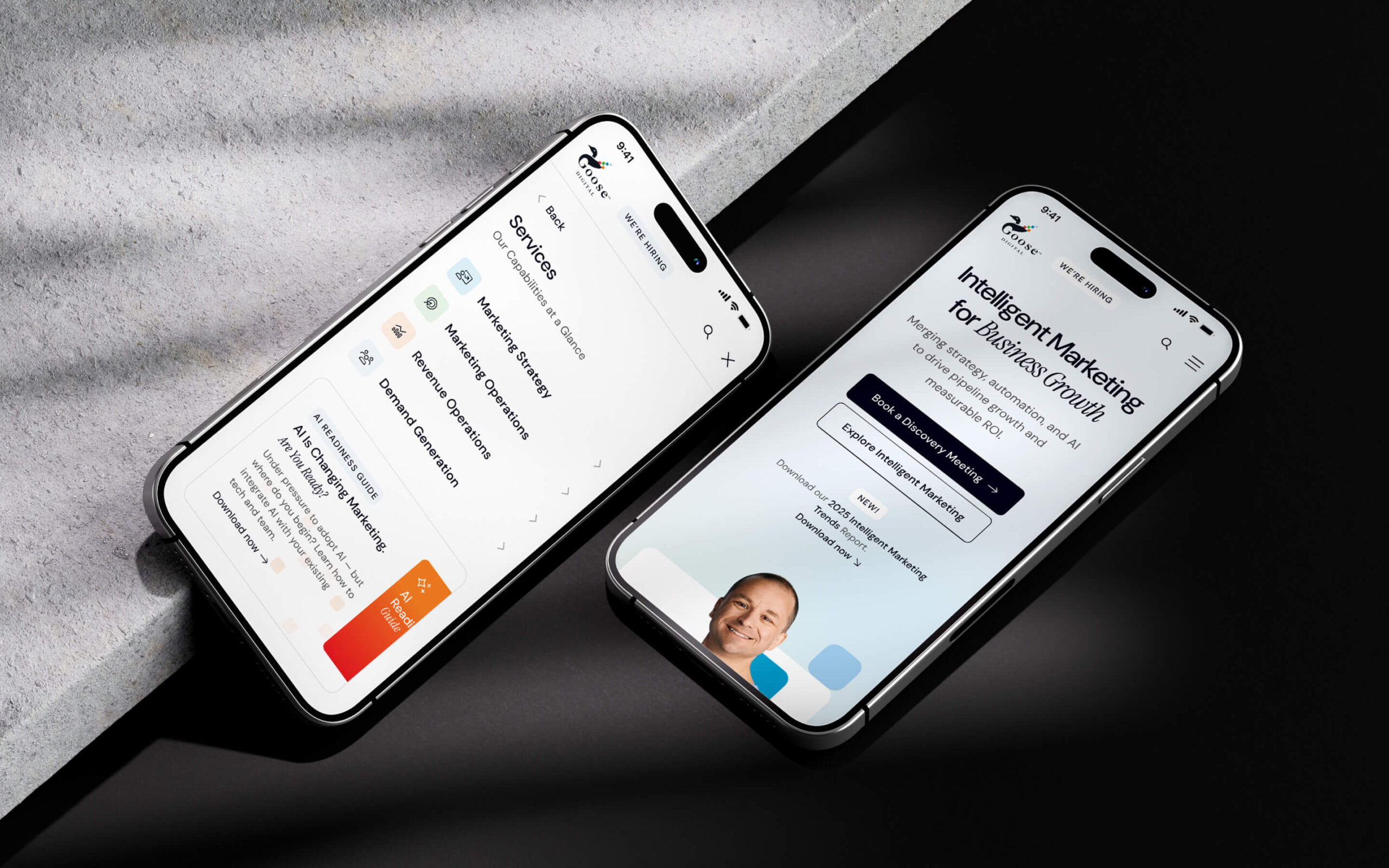
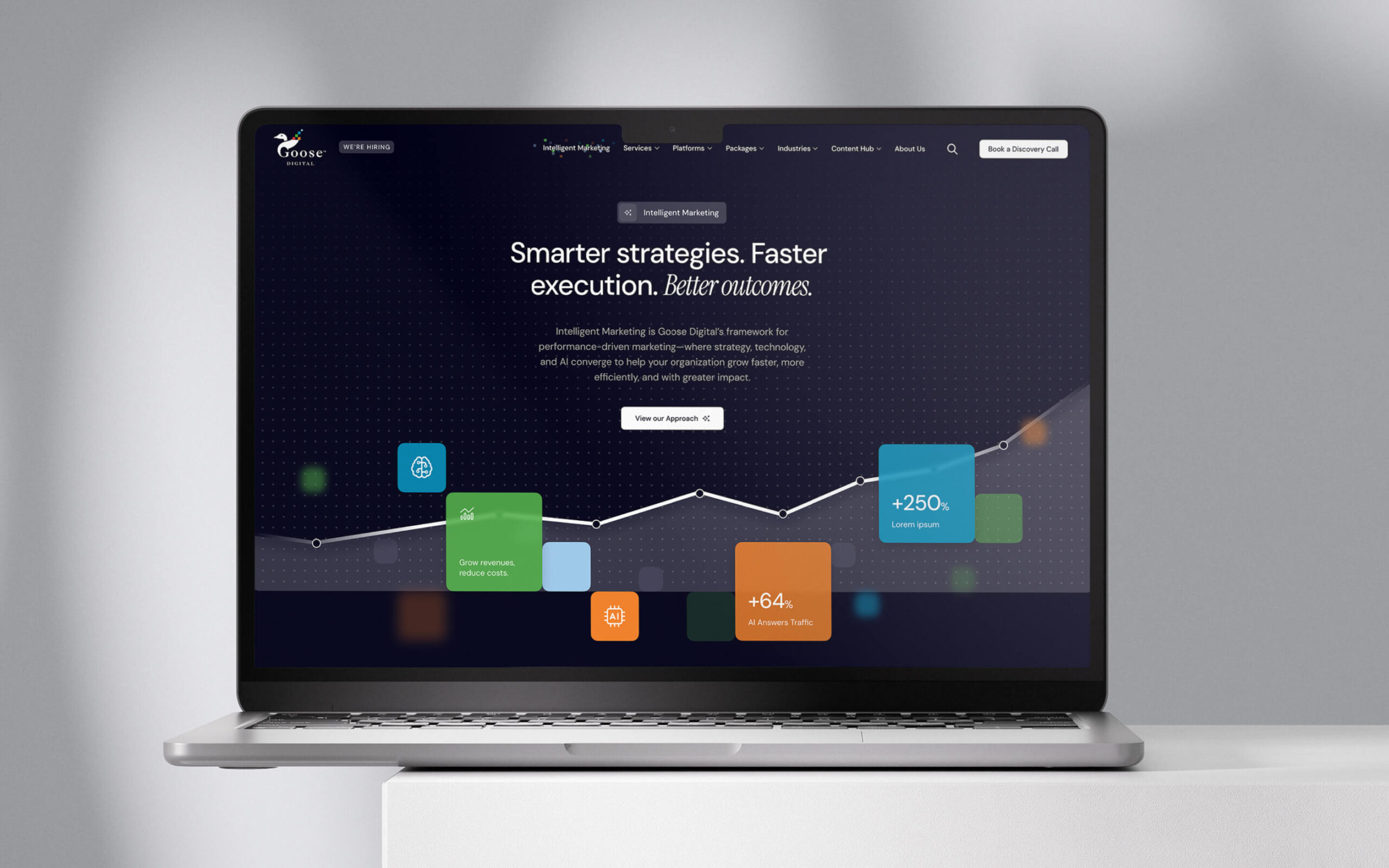
Rethinking the information architecture from scratch
We didn’t try to reorganise the existing structure. We started from zero.
Goose Digital’s offering sits at the intersection of services (what they do), industries (who they serve), and platforms (what they work with). A visitor might arrive looking for HubSpot implementation, or for marketing operations in insurance, or for demand generation broadly. The IA needed to support all three entry points without creating dead ends or circular navigation.
We mapped out the full content structure before touching any design or code. Every page got a clear purpose, every section got a clear hierarchy, and the navigation got a logic that handles complexity without overwhelming visitors. The result is a site where a CMO in insurance and a marketing director at a SaaS company can both find relevant content within a couple of clicks.
A 60+ component system instead of 20+ static pages
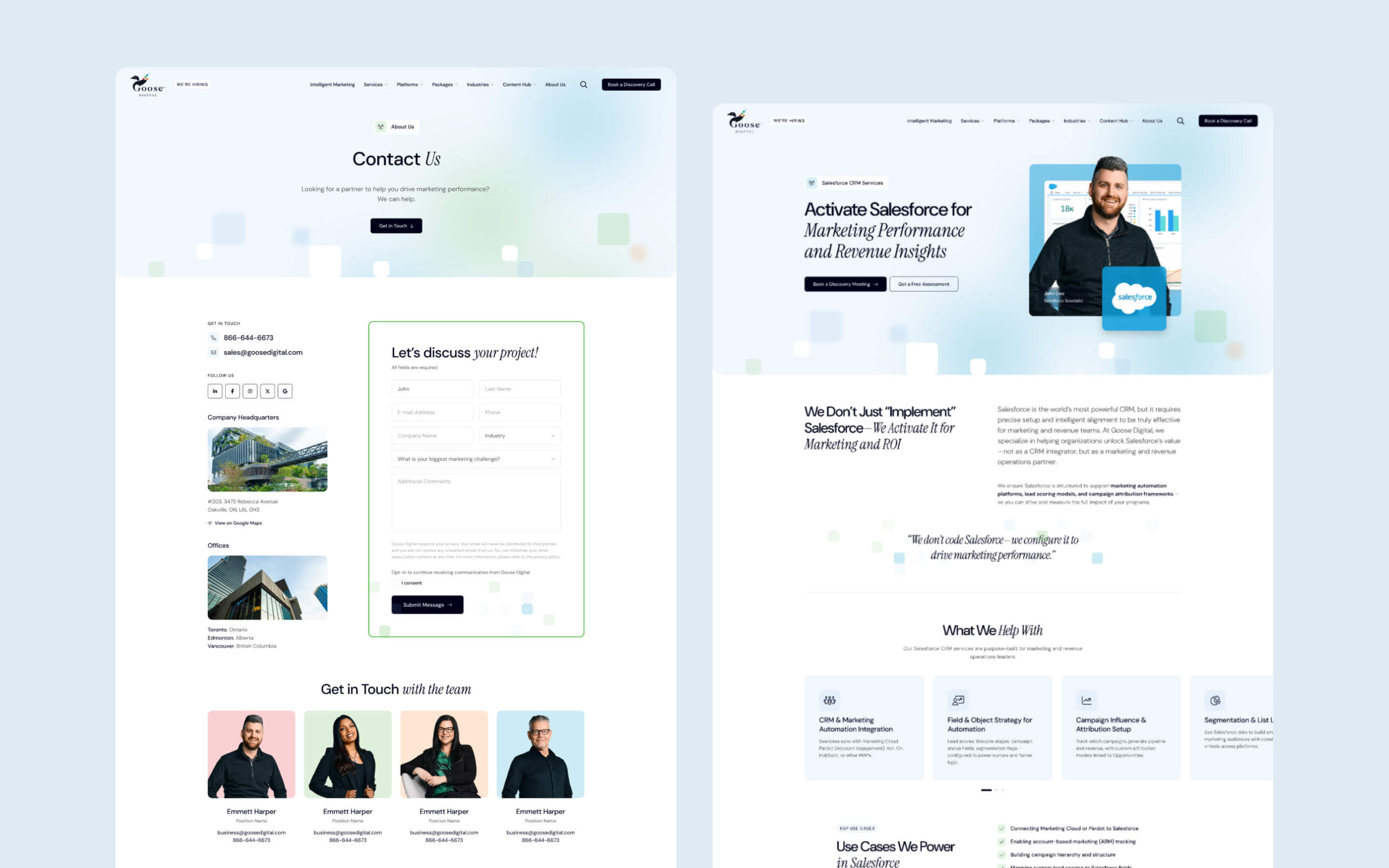
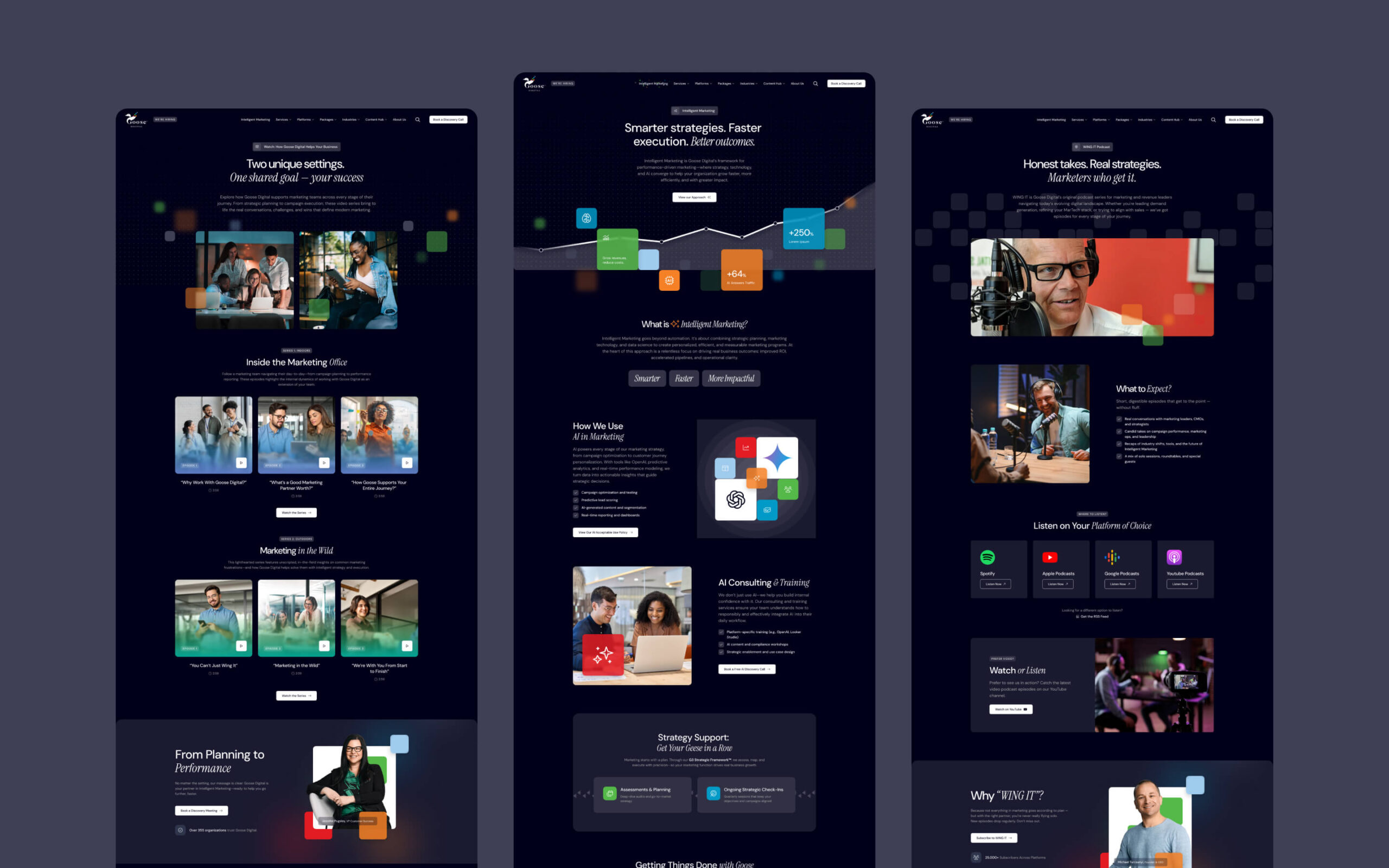
This is where the project gets interesting. Rather than designing 20+ pages individually, we built a system of 60+ reusable components that snap together in different configurations.
Each component handles a specific content pattern: service overviews, platform breakdowns, industry applications, team profiles, certification displays, statistical highlights, testimonial formats, and more. The team can combine these components to build new pages without writing code or waiting for a developer.
This approach takes longer upfront. Building 60+ components costs more than designing 20 static pages. But it pays for itself the moment Goose Digital needs page 21. Or when they want to reorganise an existing page. Or when they add a new service line after their next acquisition.
For a company that’s actively growing through acquisitions and expanding its service offering, modular beats static every time.
Restrained animation that earns its place
We added animation throughout the site, but with a specific constraint: every animation had to serve the content, not decorate it. Scroll-triggered reveals help guide attention through complex service descriptions. Hover states provide feedback on interactive elements. Transition effects smooth the experience between page sections.
What we didn’t do: parallax effects for the sake of parallax, bouncing elements that distract from reading, or loading animations that slow things down. Goose Digital’s audience is marketing directors and CMOs. These people evaluate websites professionally. Gratuitous animation would hurt more than it helps.
The result is a site that feels polished and current without feeling like it’s trying too hard.
Performance and security built in from the start
A marketing agency’s website needs to load fast. Their audience (marketing directors, CMOs, VP-level decision makers) won’t wait around. We optimised every layer: image handling, lazy loading, efficient component rendering, and clean code throughout.
Security was built into the development process, not bolted on afterwards. For a company that handles client data and runs marketing operations across multiple platforms, the website needs to reflect the same standard of care that their services do.